


Can you use Apple Music songs in Logic Pro? The answer depends on what type of Apple Music content you want to use. While Apple Music subscription tracks can't be directly imported into Logic Pro as regular audio files, compatible local audio files can be imported and edited in a Logic Pro project.
But how do you prepare an Apple Music track for Logic Pro? In this guide, we'll explain why standard Apple Music subscription songs aren't directly compatible with Logic Pro, show you how to convert them into supported formats using AudFree Apple Music Converter, and walk you through importing those files into your project. We'll also answer common questions regarding Apple Music and Logic Pro integration. Let's dive in!


Part 1. Can You Use Apple Music in Logic Pro?
Yes, Logic Pro can work with compatible Apple Music audio files, but you can't directly import songs from an active Apple Music subscription into a Logic Pro project. The key difference is between Apple Music subscription tracks and music purchased from the iTunes Store.
Apple Music subscription tracks are protected by Apple's DRM and are intended for playback within supported Apple Music environments. Even if you add a song to your library or download it for offline listening, it doesn't become a standard audio file that you can freely open, edit, or import into Logic Pro. By contrast, songs purchased from the iTunes Store are generally DRM-free and available as regular audio files, typically in M4A format.
Therefore, simply dragging an Apple Music subscription track from the Music app into Logic Pro won't give you a usable audio track.
What Audio Formats Does Logic Pro Support?
Logic Pro supports a wide range of common audio formats, making it relatively easy to work with local music files. Depending on your workflow and source material, commonly used formats include WAV, AIFF, MP3, AAC, and Apple Lossless (ALAC).
If you want to use Apple Music tracks in Logic Pro, you'll need to prepare them as compatible local audio files first. A dedicated Apple Music audio tool, such as AudFree Apple Music Converter, can help with this process and will be introduced in the next section.
| Option | Supported in Logic Pro? | DRM Protected? | Use Format |
|---|---|---|---|
| Apple Music Streaming Subscription | ❌ | ✅ | .m4p |
| iTunes Store Purchases | ✅ | ❌ | .m4a |
| Audio Converted via AudFree | ✅ | ❌ | .wav, .flac .aiff, .mp3, .m4a, .m4b |
See also: How to Remove DRM from Apple Music
Part 2. How to Prepare Apple Music Tracks for Logic Pro Using AudFree
If you don't already have a local copy of your music and don't want to purchase songs from the iTunes Store, you can use your Apple Music subscription with AudFree Apple Music Converter to prepare compatible audio files for Logic Pro.
It can process Apple Music tracks and save them as standard audio files such as MP3, WAV, FLAC, and other supported formats. So they can be imported into compatible software and music production workflows. You can also adjust output parameters, such as the sample rate and audio channel, according to your needs.
AudFree Apple Music Converter

- Convert Apple Music to MP3, WAV, and other formats supported by Logic Pro
- Preserve the original audio quality and essential ID3 tags
- Customize advanced output parameters, including the sample rate, bit rate, and audio channel
- Prepare Apple Music tracks for use in Logic Pro, iMovie, and other compatible applications
See also: How to Add Apple Music to iMovie
Steps to Convert Apple Music for Logic Pro with AudFree
- Step 1. Launch AudFree Apple Music Converter

- Install and open AudFree Apple Music Converter on your computer. Make sure the Apple Music app is available and that you can access the tracks you want to work with.
- Step 2. Import Apple Music Tracks to AudFree Conversion List

- Browse your Apple Music library through the built-in Apple Music web player in AudFree and select the songs you want to use. Click the '+' button to add them to the conversion list. You can add multiple songs or an entire playlist at once, making it more convenient to prepare several tracks for a Logic Pro project.
- Step 3. Customize Apple Music Output Formats for Logic Pro

- Once Apple Music has been added to AudFree Apple Music Converter, simply click the 'AudFree Apple Music Converter > Preferences > Conversion' option. Then you are able to select the Apple Music output format for Logic Pro, like MP3 or WAV. You can also customize some advanced audio settings such as channel, sample rate, etc. for using high-quality Apple Music on Logic Pro.
If you're preparing tracks specifically for music production, choose an uncompressed format such as WAV when practical. If you're simply testing a track or working with limited storage space, a compressed format such as MP3 may be more convenient.
See also: How to Convert Apple Music to WAV
- Step 4. Convert Apple Music Songs to Logic Pro-Supported Tracks

- Once you've selected your preferred format and settings, click 'Convert' to start processing the selected tracks. When the conversion is complete, open the designated output folder to locate the resulting local audio files.
You can then import these audio files from Apple Music into Logic Pro on Mac or iPad using the workflow described in the next section.
If you also want to prepare music from other streaming platforms for use in Logic Pro, consider AudFree Streaming Audio Recorder. It supports music from multiple major streaming services, including Spotify, TIDAL, and YouTube Music, and offers features such as batch processing, an intuitive interface, customizable output settings, and high-quality audio recording.
See also: How to Use Spotify with Logic Pro
Part 3. How to Import Apple Music to Logic Pro (Mac/iPad)
Once you have prepared compatible local audio files from Apple Music, importing them into Logic Pro is relatively simple. However, the process differs slightly between Mac and iPad. On both platforms, you should import the local audio file rather than trying to transfer a song directly from the Apple Music app.
Method 1. Import Apple Music to Logic Pro on Mac
Logic Pro for Mac provides several convenient ways to add local audio files to a project, including the File menu and drag-and-drop.

Step 1. Launch Logic Pro on your Mac and open an existing project or create a new one. If you're starting from scratch, add an Audio Track from the Tracks area. This gives you a dedicated track where you can place the imported audio.
Step 2. There are two easy ways to import your prepared audio file.
Option 1: Use the File menu
In Logic Pro, choose 'File > Import > Audio File'. Browse to the folder containing your prepared Apple Music audio files. Select the track you want to import and click 'Open'. Logic Pro will add the file to your project, where you can place it on an audio track.
Option 2: Drag and drop
You can also open Finder, locate the compatible audio file, and drag it directly into the Tracks area of your Logic Pro project. This method is often faster when you already know where your audio files are stored.
Step 3. Once the audio file has been added, you can edit and arrange it using Logic Pro's production tools.
For example, you can:
- Trim, split, or move the audio region
- Adjust volume and pan
- Apply supported audio effects
- Arrange the track on the timeline
- Combine it with software instruments and other audio tracks
- Incorporate it into a larger music production project
Method 2. Import Apple Music to Logic Pro on iPad
Logic Pro for iPad also allows you to work with compatible local audio files, although the import workflow is different from the Mac version.
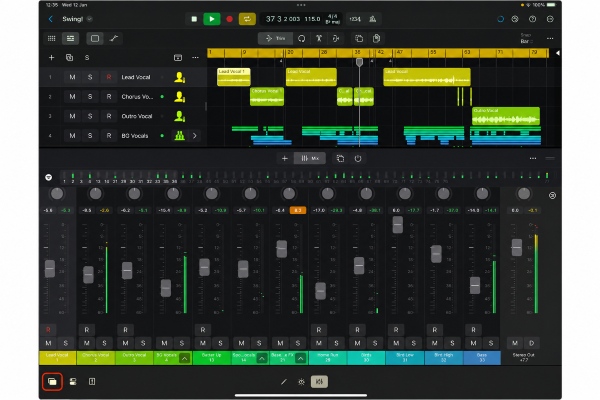
Step 1. Open Logic Pro for iPad and create a new project or open an existing one. Add an Audio Track where you want to place the imported file.
Make sure your prepared Apple Music audio file is available in the Files app on your iPad. You can store it locally on the iPad or in a supported cloud location that appears in Files.
Step 2. Open the Files browser from within Logic Pro, locate the folder containing your compatible audio file, and select the file you want to use. Import or drag the file into the project and place it on an audio track.
Step 3. After importing the file, you can arrange and edit it within your project. You can trim or split regions, adjust their position and volume, add supported effects, and combine the audio with other tracks or software instruments.
The exact interface may vary slightly depending on your iPadOS and Logic Pro version, but the basic workflow remains the same: save the audio as a local compatible file first, then import it into Logic Pro.
Part 4. FAQs About Apple Music and Logic Pro
Will converting Apple Music tracks degrade the audio quality for Logic Pro production?
It depends on the output format and settings. Choosing a lossless format such as WAV and using appropriate sample-rate and bit-depth settings can help retain high audio quality. However, converting a lossy source to WAV cannot restore quality that was already lost in the original source.
Can I commercially release Apple Music tracks edited in Logic Pro?
Generally, no. An Apple Music subscription gives you access to tracks for personal listening, not the right to redistribute, remix, or commercially release them. If you plan to publish or monetize a project containing copyrighted music, you need the appropriate licenses or permissions from the copyright holders.
What is the best output format to choose in AudFree when converting Apple Music for Logic Pro?
For music production, WAV is usually the best choice because it is uncompressed and well suited to editing and mixing. AIFF is another good option, especially within an Apple-based workflow. MP3 is more suitable when smaller file sizes are a priority rather than maximum editing quality.
Can I convert Apple Music Spatial Audio / Dolby Atmos tracks for Logic Pro?
No, converting a Spatial Audio or Dolby Atmos track to a standard format such as WAV does not necessarily preserve its original immersive audio structure. If you need to work with Dolby Atmos or spatial audio metadata and multichannel elements, use a workflow and source files specifically designed for immersive production rather than treating the track as a standard stereo file.
Conclusion
Integrating Apple Music with Logic Pro can give you access to useful reference tracks, arrangement ideas, and creative audio material. However, Apple Music subscription tracks are protected and can't be directly dragged from the Music app into a DAW such as Logic Pro.
AudFree Apple Music Converter offers a way to prepare compatible local audio files, such as WAV or MP3, for use in Logic Pro. Once the files are ready, you can import them into your project and use them alongside your own recordings, instruments, and other production elements.

Staff Editor


