


Want to add your favorite Apple Music songs to an InShot video but can't find them in the music library? You're not alone. Many users discover that even after downloading songs for offline listening, Apple Music tracks simply don't appear or can't be imported into InShot.
Fortunately, there is a practical solution. By converting your Apple Music songs into standard audio formats like MP3, WAV, or M4A, you can easily import them into InShot and use them as background music for your videos on both iPhone and Android.
In this guide, you'll learn why Apple Music doesn't work directly with InShot, how to make your music compatible, and how to add it to your projects step by step. Let's dive in!


Part 1. Can You Use Apple Music in InShot Directly?
Short answer: No, not directly.
Although Apple Music allows subscribers to download songs for offline listening, those Apple Music downloads remain protected and can only be played within the Apple Music ecosystem. InShot, like most third-party video editors, doesn't have permission to access, recognize, or use these protected files.
When you try to import a downloaded Apple Music track into InShot, you will usually face one of two issues:
- The song is greyed out and cannot be tapped.
- An explicit error message pops up stating: "This music is copyrighted and cannot be used for video editing."
Therefore, before using Apple Music as background music in InShot, you'll first need to make the songs compatible with the app. For example, if you're creating personal videos, travel vlogs, slideshows, or social media content and want to edit them with your favorite Apple Music tracks, you'll need to prepare compatible local audio files first.
| Audio Format | Supported by InShot |
|---|---|
| MP3 | ✅ |
| WAV | ✅ |
| M4A/AAC (DRM-free) | ✅ |
| FLAC | ✅ |
| Apple Music Downloads | ❌ |
If you plan to upload your videos to platforms like YouTube, Instagram, TikTok, or Facebook, remember that using copyrighted music may still trigger copyright claims or content restrictions, even if you've successfully imported the audio into InShot.
See also: How to Add Apple Music to TikTok
Part 2. How to Make Apple Music Compatible with InShot (via AudFree)
To bridge the gap between InShot and Apple Music, you need a specialized audio utility that converts protected tracks into standard audio formats without sacrificing sound quality.
AudFree Apple Music Converter is engineered specifically for this task. Operating on both Windows and macOS, it bypasses FairPlay DRM encryption and converts Apple Music tracks, albums, and playlists into raw MP3, M4A, WAV, or FLAC files at up to 17X speed. Most importantly, it retains original ID3 tags (artist, cover art, track name) and full 100% lossless audio quality. After the complete conversion, your songs from Apple Music will work with virtually any video editor, media player, or mobile device, beyond InShot.
Compared with recording music in real time or using complicated workarounds, AudFree offers a much more convenient experience. Its main features as belongings:
AudFree Apple Music Converter for InShot

- Convert Apple Music to MP3, FLAC, WAV, M4A supported by InShot
- Preserve original audio quality for clear background music
- Convert music in batches to save time
- Up to 17× faster conversion speed on supported computers
- Keep ID3 tags, including title, artist, album, genre, and artwork
- Add Apple Music to InShot app, iMovie, GarageBand, Premiere Pro, etc.
Once converted, your Apple Music files become regular local audio files that can be transferred to your iPhone, Android phone, tablet, or computer and imported directly into InShot.
How to Convert Apple Music for InShot
- Step 1. Add Apple Music to AudFree Apple Music Converter

- Download and install AudFree Apple Music Converter on your Windows or Mac computer. Open the software, log in, and it will automatically load your Apple Music library. Browse your playlists, albums, or artists, then select the songs you'd like to use in your InShot project. Click '+' to import them to the conversion list.
- Step 2. Set Apple Music Format and Parameters for InShot

- Go to click 'AudFree Apple Music Converter' > 'Preferences' to choose an output format for your video edit. You can also customize parameters like Sample Rate (44.1 kHz / 48 kHz) and Bit Rate (320 kbps) for optimal video background clarity.
For the best compatibility with InShot, we recommend:
• MP3: Excellent compatibility with both iPhone and Android;
• WAV: Ideal if you want the highest audio quality;
• M4A: Smaller file size while maintaining good quality (lightweight, high-fidelity audio).
See also: Best Way to Convert Apple Music to WAV
- Step 3. Convert Apple Music for InShot Video Editor

- Once everything is set up, click the 'Convert' button in the lower-right corner of the Converting window to start the conversion process. Depending on the number of tracks, the conversion usually finishes within a few minutes. Afterward, click the 'History/Converted' icon to locate the converted files on your computer.
- These files are now stored as regular audio files without playback restrictions, making them fully compatible with InShot and other editing software.
Looking for more rock tracks or DJ beats for your InShot edits? Go beyond Apple Music! If you want a wider selection of music for your videos, check out AudFree Streaming Music Converter. It's a versatile, all-in-one tool that supports over 10 streaming platforms, offering lossless audio quality and permanent offline access to your favorite tracks.
Part 3. How to Transfer & Add Apple Music to InShot (iPhone & Android)
After converting your Apple Music songs into InShot-compatible audio files on your Windows or Mac computer, the next step is to transfer them to your mobile device and import them into InShot. The process is slightly different on iPhone and Android, but both are simple and only take a few minutes.
On iPhone
Once the converted Apple Music files are ready, transfer them to your iPhone before importing them into InShot.
Step 1. Transfer the Converted Apple Music Songs to Your iPhone
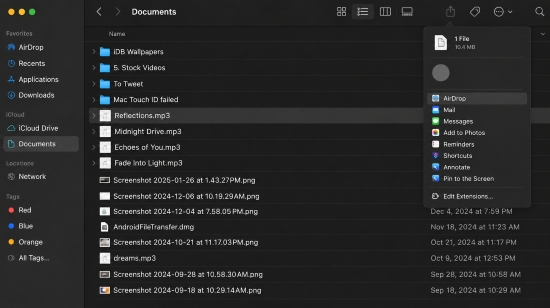
If you're using a Mac, AirDrop is the quickest and easiest transfer method.
1. Locate the converted converted local files on your Mac.
2. Right-click the files and select 'Share > AirDrop'.
3. Choose your iPhone from the list of available devices.
4. On your iPhone, tap 'Accept', then select Save to Files and choose a folder, such as 'On My iPhone > Downloads'.
If AirDrop isn't available or you're using a Windows PC or old Mac, you can transfer the converted files using Finder (macOS Catalina 10.15 or later), iTunes (Windows or older versions of macOS), iCloud Drive, or cloud storage services such as Google Drive and Dropbox.
Step 2. Import Apple Music into InShot

1. Open InShot and create a new project or open an existing one.
2. Tap 'Music' from the editing toolbar.
3. Select 'Tracks > Imported Music' (or 'Files', depending on your version of InShot).
4. Browse to the folder where you saved the converted Apple Music files.
5. Select the song you prefer to use.
6. Tap 'Use' or '✓' to add it to your timeline.
Once imported, you can trim the audio, adjust the volume, apply fade-in or fade-out effects, and sync the music perfectly with your video.
On Android
Android offers a more flexible file management system, making it easy to transfer local audio files.
Step 1. Transfer the Converted Apple Music Songs to Your Android Device
Copy the converted Apple Music files from your computer to your Android phone using a USB cable, or upload them to a cloud storage service such as Google Drive or Dropbox and download them to your device.
Step 2. Add Apple Music to InShot

1. Launch InShot and open or create a video project.
2. Tap 'Music' on the editing toolbar.
3. Choose 'Tracks > Imported Music' or 'Files'.
4. Navigate to the folder containing your transferred audio files.
5. Select the converted Apple Music track and tap Use to insert it into your project.
Now, you can then edit the audio just like any other local music file, including trimming, splitting, looping, adjusting the volume, and synchronizing it with your video for a polished final result.
If InShot doesn't display your transferred files immediately, restart the app or verify that it has permission to access your device's storage.
Part 4. Troubleshooting: Fix Apple Music Not Working Properly in InShot
Even after successfully transferring converted audio, you might run into minor playback or editing issues inside InShot. Here are some common problems and their solutions.
Issue 1: Imported Audio Has No Sound or Track is Muted
Cause 1: Your mobile device is set to Silent/Do Not Disturb mode, or media volume is turned down.
Cause 2: The original video track's volume is overriding the background music, or the added audio track was inadvertently muted.
Solution: Tap the imported audio strip on the InShot timeline, tap 'Volume', and ensure it is set to 100% or higher. Also check that the primary video track's audio is lowered to prevent overlapping sound conflicts.

Issue 2: Audio & Video Syncing Issues in InShot
Cause: Frame rate mismatches or incorrect placement on the timeline.
Solution: Zoom into the InShot timeline by pinching outward on the screen. Then, touch and drag the audio track to fine-tune where the music begins. If your track includes unwanted silence at the beginning, use InShot's 'Split' and 'Delete' tools to remove it before syncing the audio with your video.

Issue 3: InShot Can't Detect Transferred Files on iOS
Cause: System permission restrictions prevent InShot from reading local storage.
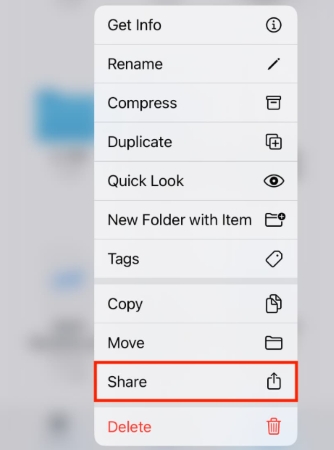
Solution: Go to your iPhone's 'Settings > InShot', and ensure that Files and Folders or Photos/Media Access permissions are toggled 'ON'. Alternatively, open the 'Files' App, locate the converted song, tap 'Share', and choose InShot from the app list to force-import it.
Part 5. Pro Tips & FAQs About InShot and Apple Music
Can I use downloaded Apple Music directly in InShot?
No. Apple Music downloads remain protected and cannot be imported directly into InShot.
Can I upload InShot videos with converted Apple Music to TikTok or YouTube?
For personal, non-commercial use, you can usually post these videos on platforms like TikTok, Instagram Reels, or YouTube without issue. However, keep in mind that platforms use automated content identification systems (like YouTube's Content ID). If you upload a commercial song without licensing, the platform may place a copyright claim on the video, monetize it on behalf of the artist, or mute the audio. For commercial/sponsored videos, always use royalty-free tracks or licensed music.
How do I trim, loop, or add fade-in/fade-out effects to Apple Music in InShot?
Once the converted track is on your timeline:
1. Tap the audio bar to open the editing menu.
2. Select Edit to apply Fade In or Fade Out sliders (1-3 seconds is recommended for smooth transitions).
3. Use the Split tool to cut out specific verses, chorus sections, or beats to align with video cuts.
Can I extract audio directly from a video file in InShot?
Yes! If you turned your converted Apple Music track into a quick video file on your computer, you can transfer that video to your phone. Inside InShot, go to Music > Tracks, tap Extract audio from video, and select the video file. InShot will pull the audio track onto your timeline instantly.
Conclusion
Although Apple Music and InShot don't work together natively, that doesn't mean you have to give up using your favorite songs in your videos. Because Apple Music downloads are protected, they can't be imported directly into InShot. However, by converting them into standard audio formats first, you can easily use them as background music for your projects.
With the help of AudFree Apple Music Converter, you can convert your Apple Music and remove DRM from Apple Music while preserving the original sound quality and metadata. Once converted, simply transfer the files to your iPhone or Android device, import them into InShot, and start editing without compatibility issues.
Whether you're creating travel vlogs, social media reels, family videos, or professional presentations, this workflow gives you greater flexibility while letting you edit with the music you love. Just remember to respect copyright rules when sharing your finished videos on public platforms.

Staff Editor


