


A captivating video is only as good as its soundtrack. Whether you are editing a fast-paced travel vlog, a cinematic montage, or a viral TikTok dance, the right background music dictates the rhythm and emotion of your content. CapCut has rapidly become the video editor of choice for creators due to its powerful tools and intuitive design. However, if your primary music library lives in Apple Music, you have likely hit a frustrating roadblock when trying to sync your favorite tracks to your timeline.
In this comprehensive guide, we will break down exactly why you cannot directly import your Apple Music playlists into CapCut, and more importantly, provide you with the complete, step-by-step solutions to bypass these limitations and add Apple Music to Capcut on desktop, mobile, and web.


Part 1. Can You Add Apple Music to CapCut Directly?
With its intuitive interface, creative effects, and seamless integration with social media platforms, CapCut has quickly become one of the most popular video editing tools among creators worldwide. However, even the most visually impressive video needs the right soundtrack - and if you are an Apple Music subscriber, you may already have the perfect song in mind for your next project
This brings up a critical question: Can you directly add Apple Music to CapCut?
The short answer is no. Although CapCut supports importing local audio files from your device, it cannot directly recognize or import songs from Apple Music - even if you have downloaded them for offline listening inside the Apple Music app.
This limitation is not a software bug. It is caused by digital rights management (DRM) protection and file format restrictions. Apple Music downloads are designed to work only within Apple's authorized ecosystem, preventing third-party applications like CapCut from accessing or editing these files.
View also: How to Remove DRM from Apple Music
To understand why Apple Music and CapCut cannot work together directly, let's take a closer look at their technical differences.
Format Compatibility: CapCut vs Apple Music
| Platform / Source | Audio Format | DRM Protection | CapCut Compatibility |
|---|---|---|---|
| CapCut Video Editor | MP3, WAV, M4A (AAC), WMA, FLAC | ❌ | / |
| Apple Music Subscription | Protected AAC audio (M4P-based files) | ✅ | ❌ |
| iTunes Store Purchases | DRM-free AAC/M4A files (for newer purchases since 2009) | ❌ | ✅ |
| AudFree Converted Audio | MP3, WAV, FLAC, M4A, AIFF, etc. | ❌ | ✅ |
As the table shows, the main obstacle is not the audio format itself, but the DRM encryption attached to Apple Music subscription downloads.
Apple Music uses Apple's proprietary FairPlay DRM technology to protect subscription-based content. Even when a song is downloaded for offline playback, the file remains encrypted and can only be played through authorized Apple applications, such as the Apple Music app.
Because CapCut is a third-party video editor and does not have permission to decrypt FairPlay-protected files, it cannot access or import these songs into a video timeline.
The good news is that you do not have to rely only on CapCut's built-in music library or generic background tracks. By converting Apple Music songs into compatible audio formats, you can bridge the gap between Apple Music and CapCut and use your favorite tracks in your creative projects.
Please avoid using mainstream Apple Music tracks entirely for commercial content or sponsored videos. Converting Apple Music via AudFree is strictly intended for personal entertainment, education, and offline archiving. For commercial scenarios, we highly recommend utilizing royalty-free platforms like Epidemic Sound or Artlist.
In the following sections, we will explore different methods to add Apple Music to CapCut, including how to handle purchased iTunes tracks and subscription-based Apple Music songs.
View also: How to Add Apple Music to Video
Part 2. Method 1: Export iTunes Music to CapCut (Official Apple Songs)
Before diving into third-party conversion tools, it is crucial to determine the exact source of your music. If the song you want to use is one you explicitly purchased from the iTunes Store (for example, paying $0.99 or $1.29 per track), or if it is a royalty-free song you manually ripped from a CD and uploaded to your iTunes library, you are already halfway there.
Since 2009, Apple has offered iTunes Store purchases completely DRM-free. These files are typically stored in the high-quality M4A (AAC) format, which is fully compatible with modern video editors, including CapCut.
If you only use a streaming subscription (paying a monthly fee for access to millions of songs), none of your offline downloads will be in this DRM-free format. If that is your situation, proceed directly to Method 2.
How to Find and Use your Purchased iTunes Music for CapCut
Step 1. Open the Apple Music app (on Mac) or iTunes (on Windows).
Step 2. Navigate to your library and locate the purchased track.

Step 3. Right-click the track and select Show in Finder (Mac) or Show in Windows Explorer (PC).
Step 4. This will reveal the physical .m4a file on your hard drive.
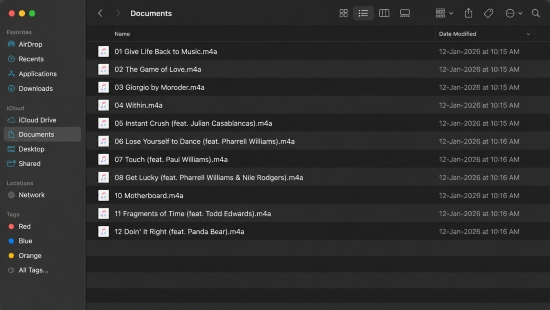
Step 5. You can now drag and drop this exact file directly into your CapCut media bin.
Part 3. Method 2: Prepare Apple Music as Local Audio Files for CapCut
For the vast majority of users who rely on an Apple Music monthly subscription, the songs in your library are locked in the M4P format. To use these tracks in CapCut, you must bridge the compatibility gap by processing them into standard MP3, WAV, or other CapCut-supported files.
This is where a specialized tool like AudFree Apple Music Converter becomes essential for Capcut video creators. Designed specifically to handle encrypted Apple audio, this software allows you to locally decode Apple Music tracks, albums, and podcasts into CapCut-friendly formats while maintaining 100% original lossless audio quality and preserving all metadata (ID3 tags).
AudFree Apple Music Converter

- Convert Apple Music to MP3, WAV, AIFF, FLAC, M4A, and more
- Download Apple Music for unrestricted offline listening forever
- Keep the original ID3 tags for perfect use as background music
- Help add Apple Music to CapCut, iMovie Video Editor, or any other platform
View also: How to Add Apple Music to iMovie
How to Unlock Apple Music for CapCut Editing via AudFree
Now, refer to the following tutorial to export Apple Music to a CapCut-compatible format in practice.
- Step 1. Add Apple Music Tracks to AudFree Apple Music Converter

- Install AudFree Apple Music Converter on your Windows or Mac computer and log in to your Apple Music account through the built-in web player. Browse any track or playlist you want to use or add to CapCut, then tap on the '+🎵' icon to load them to the Converting window on AudFree.
- Step 2. Set Output Format of Apple Music for CapCut

- Click the 'menu' icon in the upper-right corner, then choose 'Preferences > Conversion'. Now, select MP3 or WAV as the Apple Music output format as needed for compatibility with CapCut. In this window, you can also customize other parameters such as audio channel, bit rate, etc. as needed. After that, tap 'OK' to apply.
View also: How to Convert Apple Music to WAV
- Step 3. Convert and Export Apple Music for CapCut Video Editor

- Simply navigate to the Converting section and press the 'Convert' button in the lower-right corner. This tool will automatically start converting and downloading Apple Music to the target format. When finished, you can navigate to the target folder on your computer to view the unprotected Apple tracks. Now, you get Apple Music free forever on your device. Then you can import music from Apple Music to CapCut with ease.
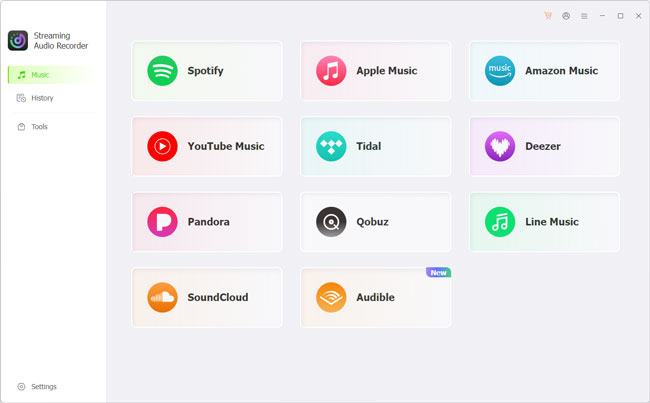
If your audio needs extend beyond Apple's ecosystem - perhaps you also want to pull sound effects from Spotify, Tidal, or YouTube Music - you might consider the AudFree Streaming Audio Recorder. This versatile alternative captures audio from over 10 major streaming services on your computer, making it a great all-in-one backup tool for multi-platform creators.
Part 4. How to Add Apple Music to CapCut on Windows & Mac
Now that you have your clean, high-quality MP3 or WAV files ready on your computer, importing them into CapCut's desktop application is incredibly straightforward. The overall interface and workflow are almost identical whether you are editing on a Windows PC or a Mac, making it easy to add your favorite audio tracks to any project.
Step 1. Open the CapCut desktop app on your Windows PC.
Step 2. Click the '+ Create project' or '+ New project' button on the main page. Then create a new editing project. Import your video clips if needed.

Step 3. Go to 'Media' from the left sidebar and click 'Import' (or 'Local files', depending on your CapCut version). Browse the audio files saved on your computer.

Step 4. Select the converted Apple Music tracks and click 'Import'. Once added to your media library, drag the songs onto the audio timeline and adjust them according to your video.
Now, you can now trim the audio, adjust the volume, or use CapCut's "Auto Beats" feature to match your video cuts to the rhythm of the music.
Part 5. How to Import Apple Music to CapCut on iPhone & Android
With mobile editing driving a massive portion of CapCut's user base, the mobile app comes packed with advanced desktop-grade features - including keyframes, precision color grading, speed curves, and 4K exports. However, incorporating custom audio on a smartphone introduces a slight detour: you need to transfer your converted Apple Music tracks from your computer over to your mobile device.
Fortunately, modern wireless and cloud transfer methods make this step incredibly quick and painless. Once your Apple Music tracks are saved locally, syncing them as background music (BGM) in CapCut Mobile is completely effortless.
Phase 1: Transfer the Apple Music Local Files to Your Phone
For iPhone/iPad
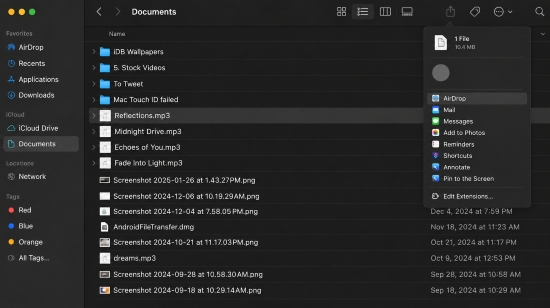
If you use a Mac, AirDrop is usually the fastest option. Select your converted MP3 or WAV files in Finder, click 'Share > AirDrop', and send them to your iPhone or iPad.
After receiving the files, save them to the Files app so they can be easily accessed when importing into CapCut.
View also: How to Move Apple Music to iPhone
For Android
You can upload the converted tracks to a cloud service such as Google Drive, or transfer them directly through a USB cable.
After downloading or copying the audio files to your Android device storage, they will be ready for use in CapCut.

View also: How to Transfer Apple Music to Android
Phase 2: How to Add a Song from Apple Music to CapCut Mobile App
Step 1. Launch the CapCut Video Editor from your phone or tablet. Then click the 'New Project' option in the app to create a new project.

Step 2. Then use your original video or film a new video on CapCut.

Step 3. Add background music to the video by pressing the 'Audio' menu at the bottom.

Step 4. Select the 'Sounds' > 'Your Sounds' button from the bottom toolbar.

Step 5. Tap the 'From Device' option and find the Apple Music song you want to add.

Step 6. Finally, click the '+' button to add songs from Apple Music to CapCut Video Editor.

The song will now appear underneath your video, where you can trim, adjust volume, add fade effects, or sync it with your footage.
Spend 15 minutes batch-converting your favorite Apple Music playlists via AudFree on your computer, and drop them all into a dedicated "BGM" folder on your phone. You will have a permanent, offline library of high-quality audio ready for mobile editing anytime, anywhere.
Part 6. How to Upload Apple Music to CapCut Web
If you prefer editing videos directly in your browser, CapCut's Online Editor provides a convenient alternative to the desktop and mobile apps. It integrates smoothly with cloud storage, making audio management a breeze.
Follow these steps to add your converted Apple Music tracks:
Step 1. Navigate to the official CapCut website: https://www.capcut.com/editor (Chrome or Safari recommended).
Step 2. Click the 'Upload' button or the big + icon to choose and open the existing video from your device.

Step 3. Drag and drop the converted Apple Music file to this window directly. Or you can click the 'Upload' button to add the target song from your computer.
You have two highly efficient option here:
- Direct Upload: Simply drag and drop the converted MP3 files from your computer's local folder straight into the browser window.
- Cloud Integration: If you click the upload options, you can connect your Google Drive or Dropbox account. If you previously saved your AudFree converted files to the cloud, you can fetch them directly from the server without touching your local hard drive.

Step 4. Once uploaded, tap the audio at the left side and drag it to the soundtrack to add music from Apple Music to CapCut video for free creation and editing.
Part 7. Apple Music Not Working in CapCut? (Troubleshooting)
Running into issues when trying to pair your favorite Apple Music tracks with your CapCut video projects? Don't worry - you aren't alone. Below are the two most common roadblocks video creators face when importing Apple Music into CapCut and exactly how to fix them.
Fix 1: Apple Music Tracks Are Grayed Out or Missing in CapCut
The Problem:
When you open CapCut on your mobile device or desktop, navigate to your local files, and browse your music library, you might notice that your downloaded Apple Music songs are either grayed out (unclickable) or don't show up in the folder at all.
Why It Happens:
CapCut can only read standard, unprotected audio extensions like MP3, WAV, or WMA. Even if you have "downloaded" the songs via the Apple Music app for offline listening, those files are actually cached in a proprietary, encrypted M4P format tied to Apple's Digital Rights Management (DRM). Because CapCut doesn't have the internal license to decrypt M4P files, it filters them out entirely to prevent system crashes. Additionally, any tracks stored in iCloud are inaccessible to CapCut unless they are fully downloaded to your device's local storage.
The Solution:
You cannot use raw Apple Music cache files directly. To make them visible and selectable:
- Use AudFree Apple Music Converter on your computer to process those M4P files.
- Ensure you select MP3 or WAV as the target container in the conversion preferences.
- Once converted, transfer the newly generated audio files back to your device's native local storage (e.g., the Files app on iOS or internal storage on Android) instead of the Apple Music app library. They will now appear fully accessible in CapCut.
Fix 2: Avoiding Copyright Muting and Flags in CapCut
The Problem:
You successfully converted a trending Apple Music track to FLAC or MP3 DRM-free, imported it into CapCut, and finished editing your masterpiece. However, upon uploading the exported video to platforms like TikTok, YouTube, or Instagram, your video gets instantly muted, blocked, or flagged for a copyright violation.
Why It Happens:
It is important to distinguish between format compatibility and copyright ownership. Converting an Apple Music track to MP3 removes the technical barrier (the format lock), allowing CapCut to edit it. However, it does not grant you a legal synchronization license for public distribution. Social media platforms use automated audio-fingerprinting algorithms to detect commercial music and protect the intellectual property of artists and record labels.
The Solution:
To navigate copyright regulations while sharing your work, follow these industry best practices:
- For Personal & Social Sharing (TikTok/Instagram Reels): Instead of uploading your video with the Apple Music audio already burnt into the file, export your video from CapCut without background music. Then, upload the video to TikTok/Instagram and select the exact same song from the platform's official Commercial Audio Library. This ensures the artist gets credited properly, and your video stays unmuted.
- For Commercial Projects & Monetized Channels (YouTube/Client Work): If you are creating sponsored videos, advertisements, client projects, or monetized YouTube content, avoid using mainstream Apple Music tracks unless you have the necessary permissions. A better option is to use royalty-free music libraries or licensed background music.
Remember: converting Apple Music files makes them technically editable in CapCut, but it does not change the copyright status of the music itself.
Part 8. FAQs about CapCut and Apple Music
Why CapCut Couldn't Export iTunes Music?
If you sync your iPhone with a computer using iTunes or the Apple Music app, the library often creates shortcuts or placeholder files that point back to Apple's cloud. CapCut cannot read or export these cloud-tethered shortcuts. Furthermore, any legacy songs purchased before 2009 may still carry old DRM protections. Using AudFree Apple Music Converter ensures all tracks from your library are compiled into actual, self-contained, unprotected local files that CapCut can read, edit, and export flawlessly without triggering internal system errors.
Is It Legal to Add Copyrighted Apple Music Songs to My CapCut Videos?
It depends entirely on how and where you intend to distribute the video. Converting and editing tracks for personal enjoyment, offline archiving, private family videos, or school projects is generally considered fair use. However, using them in commercial projects and publish your video publicly on social platforms without proper authorization may violate copyright laws. So, it's recommended to use royalty-free or licensed music for public or commercial projects.
Are There Any Free Ways to Use Apple Music on CapCut?
Yes, there are free online audio recorders and open-source ripping tools available. However, they come with significant trade-offs, like quality loss, low efficiency, and security risks. For a clean, fast, and safe workflow, a professional desktop tool like AudFree is highly recommended because it offers high-speed batch conversion while keeping your computer secure.
Will Converting Apple Music to MP3 Ruin the Audio Quality for My CapCut Video Projects?
No, provided you use professional software. AudFree Apple Music Converter supports 100% lossless conversion. By setting your output format to WAV or FLAC, or maximizing the MP3 bit rate to 320kbps, you retain studio-grade audio quality that will sound crystal clear when exported from CapCut.
In Conclusion
Music is the heartbeat of video editing, and technical format restrictions shouldn't stand in the way of your creativity. While CapCut and Apple Music do not integrate directly out of the box, the workaround is incredibly efficient once you set up your workflow.
By utilizing AudFree Apple Music Converter to process your streaming library into clean, high-quality local MP3 or WAV files, you unlock complete creative freedom. Whether you are cutting a cinematic sequence on your desktop or quickly splicing a vlog on your mobile device, you will finally have unrestricted access to the music that makes your content shine.

Staff Editor


