


As digital DJing continues to evolve in 2026, relying on live streaming services for club gigs or events remains a heavily debated topic. If you find yourself asking, 'Can I DJ with Amazon Music?' the answer is a definitive yes. But achieving a professional setup requires navigating a few native limitations. To achieve a flawless, zero-latency set, true professionals rely on local audio.
This ultimate guide will break down exactly how to extract your Amazon Music library into lossless formats (FLAC/WAV) and seamlessly integrate it into any heavyweight software, whether you spin on Serato DJ Pro, Rekordbox, Virtual DJ or Algoriddim djay.


Part 1. What is Amazon Music DJ Mode?
Amazon Music's DJ Mode is a curated listening experience designed to feel like a live radio show. Instead of a standard playlist, it blends your favorite songs with artist commentary, behind-the-scenes stories, and seamless transitions. The feature is powered by an AI that personalizes the song selection based on your listening habits, making it feel like you have your own private Amazon Music AI DJ.
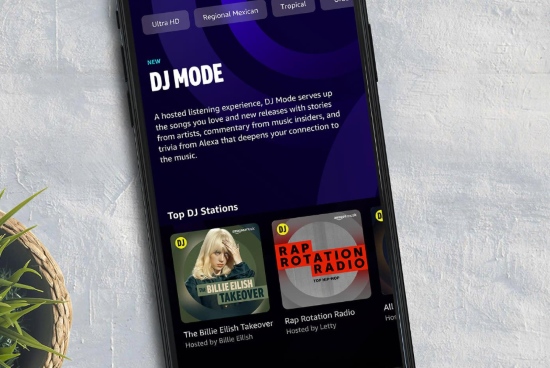
You can access DJ Mode on Amazon Music through the mobile or desktop app, or by using an Alexa-enabled device. Simply ask Alexa to "play [Station Name] in DJ Mode" to get started. It's a fun and engaging way to discover new music and enjoy your favorite genres in a fresh format.
See also: How to Play Amazon Music on Alexa
Key Features of Amazon Music DJ Mode
Exclusive Content: Access to exclusive tracks, remixes, and live performances that are not available in the standard Amazon Music catalog.
Curated Playlists: Playlists are curated by DJs, featuring a mix of popular tracks, new releases, and hidden gems. They are often centered around specific themes or genres.
Interactive Elements: Occasionally, interactive elements like shout-outs, dedications, and listener requests might be included. They make the experience feel more engaging and personalized.
How to Use Amazon Music DJ Mode
Step 1. Open the Amazon Music app on your device.
Step 2. Look for playlists or stations labeled with 'DJ Mode' or search for specific DJ content in the app.

Step 3. Select the DJ playlist or station you want to listen to. Enjoy the enhanced listening experience with live commentary and curated tracks.
Is Amazon Music DJ Mode for professional DJs?
No. This is where a lot of confusion comes in. While the feature uses the term "DJ", DJ Mode is a passive listening experience, not an interactive tool for mixing. It doesn't offer the essential functions that professional or hobbyist DJs need, such as:
• Mixing and cueing: You can't manually mix tracks, set cue points, or control the tempo.
• DJ hardware integration: It doesn't work with DJ controllers or other hardware.
• Exporting tracks: The feature is solely for streaming, and you can't export tracks to use in professional software.
For those who want to DJ with Amazon Music, you'll need to use specialized software that integrates with the service. Unfortunately, due to licensing restrictions, few professional DJ software platforms currently offer direct integration with Amazon Music's streaming library.
Part 2. Official DJ Hardware and Software Compatible with Amazon Music
Compared with streaming services like TIDAL, finding DJ software that works with Amazon Music is still a major challenge. At present, native Amazon Music DJ integration is very limited. Unlike platforms such as TIDAL or Beatport Streaming, Amazon Music does not officially support most mainstream DJ apps, including Serato DJ, rekordbox, Virtual DJ, Traktor Pro, or djay Pro.
Currently, the only official ecosystem offering Amazon Music integration is Engine DJ alongside selected standalone DJ hardware. Below, we'll look at the devices and software platforms that currently support Amazon Music and how to use them for DJ mixing.
Engine DJ itself does not independently stream Amazon Music on desktop software alone. Amazon Music support is available only through compatible standalone hardware running the Engine DJ ecosystem.
1. Numark Mixstream Pro+
Numark Mixstream Pro+ is one of the first DJ controllers that works with Amazon Music natively. With built-in Wi-Fi connectivity, it allows you to log directly into your Amazon Music Unlimited account and stream tracks without using a laptop. This makes it an excellent Amazon Music DJ controller for beginners, home users, and mobile DJs.
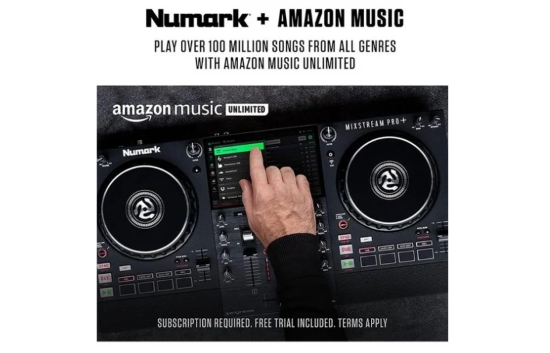
How to DJ with Amazon Music on the Numark Mixstream Pro+
Step 1. Connect to the internet: Power on the Mixstream Pro+ and connect it to a Wi-Fi network.
Step 2. Access streaming services: On the touchscreen, tap the "Source" button and select Amazon Music from the list of streaming services.
Step 3. Sign in: Follow the on-screen instructions to log in to your Amazon Music Unlimited account.
Step 4. Search and explore: Use the controller's touchscreen to browse your playlists, search for specific songs, or discover new tracks from the Amazon Music catalog.
Step 5. Load tracks: Tap a track to load it onto one of the two decks. From there, you can use the jog wheels, EQ, and effects to perform your mix.
2. Denon DJ
Denon DJ offers several professional standalone DJ systems that support Amazon Music integration through the Engine DJ platform. Devices in the PRIME series, such as the Prime 4 and SC Live models, can connect directly to Amazon Music Unlimited from the hardware itself.
This setup allows DJs to stream and mix tracks without converting files beforehand, making Denon DJ one of the few professional solutions compatible with Amazon Music streaming.

How to DJ with Amazon Music on Denon DJ Controllers
Step 1. Ensure compatibility: Make sure your Denon DJ controller or media player is one of the models that supports native Amazon Music integration (e.g., Prime 4, SC6000). Check for the latest firmware updates to ensure the feature is enabled.
Step 2. Connect to Wi-Fi: Ensure your Denon DJ hardware is connected to a stable Wi-Fi network.
Step 3. Log in to Amazon Music Unlimited Account: On the controller's screen, navigate to the source selection menu and choose Amazon Music. You'll be prompted to enter your Amazon account credentials.
Step 4. Browse and search: Once logged in, you can browse your Amazon Music playlists, search for specific songs, or explore curated charts directly on the device.
Step 5. Load and mix: Select a track and load it onto one of the decks. You can then use the physical controls on the Denon DJ unit to mix, scratch, and apply effects as you would with any other audio source.
See also: Use Amazon Music with Denon DJ
However, through limited hardware ecosystems with support, such as the Numark Mixstream Pro+ and Denon DJ standalone systems, most popular DJ software platforms still lack native Amazon Music support. For broader compatibility and truly unrestricted mixing, many DJs still prefer converting Amazon Music into local FLAC or WAV files for use across any DJ software or hardware platform.
In the next section, we will explore exactly why professional DJs prefer working with local audio files and highlight the key benefits of using local Amazon Music tracks for your mixes.
Part 3. Why DJs Convert Amazon Music to Local FLAC/WAV Files
Streaming technology has made music access more convenient than ever. However, when it comes to professional DJing, most DJs still prefer using local audio libraries instead of relying entirely on streaming services like Amazon Music.
The reason goes far beyond simple compatibility issues. Local FLAC and WAV files provide greater stability, better performance, higher flexibility, and access to advanced DJ features that streaming platforms often cannot fully support. For live performances, club events, and professional mixing sessions, local audio files remain the most reliable solution.
Here are some of the biggest advantages of converting Amazon Music tracks into local lossless files.
1. More Stable Performance for Live DJ Sets
Internet-based streaming always carries some level of risk. Poor Wi-Fi, unstable mobile data, server outages, or platform restrictions can interrupt playback during a live performance.
With locally stored FLAC or WAV files, DJs can perform completely offline without worrying about buffering, connection drops, or loading delays. This is especially important for clubs, weddings, festivals, and mobile DJ events where network conditions may not be reliable.
2. Better Audio Quality for Professional Mixing
Amazon Music Unlimited offers HD and Ultra HD audio quality, but streaming quality can still fluctuate depending on network conditions and device limitations.
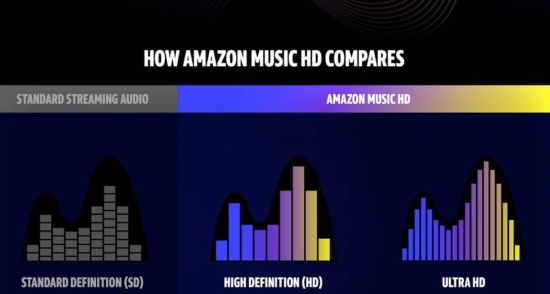
By converting tracks into local lossless formats such as FLAC or WAV, DJs can preserve higher audio quality for cleaner transitions, deeper bass response, and more accurate sound reproduction on professional speaker systems.
Lossless files are also better suited for sound processing tasks like EQ adjustments, looping, remixing, and live effects.
See also: How to Download Amazon Music to FLAC
3. Access to Unlimited DJ Features
Not just Amazon Music, most DJ software platforms provide fewer features when working with streaming tracks due to DRM protection and streaming restrictions.
For example, some streaming tracks may not support:
- Recording DJ mixes
- Advanced waveform analysis
- Real-time stems separation
- Cue point saving
- Beatgrid editing
- Offline library management
- External file exporting
Once Amazon Music tracks are converted into local audio files, they can be freely imported into nearly any DJ software, including Serato DJ, rekordbox, Virtual DJ, djay Pro and Traktor Pro, unlocking the full set of professional DJ tools.
4. Permanent Access to Your DJ Library
Streaming music libraries can change at any time, no matter Amazon Music or TIDAL. Songs may disappear due to licensing updates, regional restrictions, or account limitations.
Local audio files give DJs long-term access to their music collection without depending on an active subscription or internet connection. This makes it easier to build a reliable DJ library for future performances, backups, and archive purposes.
See also: How to Get Amazon Music Downloads
5. Better Cross-Platform Compatibility
Local FLAC and WAV files work almost everywhere. After conversion, Amazon Music tracks can be transferred to USB drives, SD cards, external hard drives, standalone DJ systems, CDJs, and various DJ apps without platform restrictions.
This flexibility is especially useful for DJs who switch between different hardware setups or perform on multiple systems.
Because of these advantages, many DJs prefer converting Amazon Music into local lossless audio files before mixing. It offers a more stable, flexible, and professional DJ experience compared with relying entirely on streaming playback.
Part 4. How to Convert Amazon Music to Lossless Formats for Unlimited DJ Mixing
Based on the advantages above, many professional DJs choose to convert Amazon Music tracks into local audio files before mixing. This gives them full compatibility with professional DJ software, unrestricted offline playback, and access to advanced mixing features.
To bridge the gap between Amazon Music's encrypted ecosystem and your performance DJ app, you need a high-speed downloader tool. This is where AudFree Amazon Music Converter becomes the assistant of your workflow. It strips away container restrictions, exporting your playlists directly into uncompressed, open-source formats while preserving critical ID3 metadata.
Another major advantage is flexibility. Whether you use an Amazon Music Unlimited account or a free Amazon Music account (with lower audio quality), the software can save tracks locally for offline DJ mixing. It also supports up to 15X faster conversion speed, batch downloads, and customizable audio settings such as bit rate, sample rate, and audio channels.
AudFree Amazon Music Converter

- Convert Amazon Music to MP3, WAV, FLAC, AIFF, and more
- Preserve original sound quality and ID3 metadata
- Batch download Amazon Music DJ playlists or stations for offline mixing
- Support up to 15X faster conversion speed
- Customize sample rate, bit rate, and output quality
- Import converted tracks into any DJ software
- Work with both Amazon Music Unlimited and free accounts
Steps to DJ with Amazon Music Without Restrictions
Before getting started, download and install AudFree Amazon Music Converter on your Windows or Mac computer. Whether you spin on Serato DJ Pro, Rekordbox, Virtual DJ, Traktor, Engine DJ, or djay Pro, here is the ultimate 4-step workflow to build a synchronized, universally accessible local music library.
- Step 1. Adjust Output Format for DJ Software

- Before extracting a single note, you must configure your output parameters to match the system architecture of professional DJ hardware.
- Launch AudFree Amazon Music Converter and access the 'Preferences' > 'Conversion' panel. Here, you can align your settings based on your performance venue requirements using our structural matrix below:
| Output Format | Target Use Case | Audiophile Pros & Cons |
|---|---|---|
| WAV | Club PA Systems & Festival Stages | Pro: Studio-grade, uncompressed bit-perfect audio. Zero CPU decoding overhead. Con: Massive file sizes; historically limited metadata tagging. |
| FLAC | Advanced Laptop DJing & Storage Optimization | Pro: 100% Bit-perfect lossless quality at roughly half the file size of WAV. Excellent metadata integration. Con: Requires minor CPU decoding overhead mid-set. |
| MP3 (320kbps) | Mobile DJing, Gigging, & Bar Sets | Pro: Universal compatibility across legacy CDJs, minimal storage footprint, instant track loading. Con: Lossy compression; slight loss of high-frequency brilliance on massive club sound systems. |
See also: How to Convert Amazon Music to WAV
If your target controller or club nexus setup (e.g., Pioneer CDJ-3000) utilizes high-end internal DACs, set your AudFree sample rate to 48kHz or 192kHz / 24-bit to guarantee pristine, artifact-free analog output.
- Step 2. Add Amazon Music DJ Songs to AudFree Amazon Music Converter

- With your audio profiles configured, it is time to prepare your performance sets. Use the built-in Amazon Music browser within AudFree to navigate to your curated performance crates, setlists, or custom stations. Then just tap the "+" button to load all Amazon tracks to conversion list.
- Step 3. Convert Amazon Music Songs for DJ Apps

- Click 'Convert' to initiate the batch process. Operating at up to 15X acceleration, the engine systematically decodes the streams, locks in the original audio quality, and hardcodes the ID3 tags directly into the files. Once completed, click the 'Converted' (History) icon to open your master destination folder.
- Step 4. Import Files into DJ Software

- Now you can freely import your converted music into your Rekordbox, Serato DJ, Virtual DJ, or Engine DJ.
- Serato DJ Pro / Virtual DJ: Simply drag your master folder directly into the "Crates" or "Local Drive" tree sidebar.
- Rekordbox: Go to 'File > Import > Folder' and select your master directory.
- Engine DJ: Import the folder into your desktop engine to auto-generate identical playlists for USB export to standalone hardware (Denon/Numark).
- And at this point, your Amazon Music tracks behave exactly like normal local DJ files. They behave exactly like traditional digital vinyl files. You can safely build permanent Hot Cues, map intricate Saved Loops, record your live mixes without copyright flags, and completely unlock AI Stems separation engines without a single frame of lag.
1. Create a master folder on your internal SSD or high-speed external drive named Master DJ Library. Organize your newly extracted AudFree files into sub-folders based on Genre, Energy, or Set Timing.
2. Open your preferred DJ software and mirror this root directory:
Looking to unify music from even more ecosystems? For multi-platform DJs, the AudFree Streaming Audio Recorder offers cross-compatibility across 10+ major networks - including Tidal, Spotify, and SoundCloud - allowing you to fuse disparate streaming worlds into one unified, offline performance library.
Part 5. FAQs About DJing with Amazon Music
Why can't I use downloaded Amazon Music tracks for DJing?
Because Amazon Music downloads are protected by DRM (Digital Rights Management). Even after downloading songs inside the Amazon Music app, the files remain encrypted and can only be played within Amazon Music itself. This means DJ software like Serato DJ, rekordbox, or VirtualDJ cannot read or import them directly. To use Amazon Music tracks for DJing, you first need to convert them into standard local audio formats such as MP3, WAV, or FLAC.
Will converting Amazon Music tracks affect BPM detection or Beatgrid analysis?
No. High-quality converters like AudFree Amazon Music Converter preserve the original audio timing and structure during conversion. After importing the converted files into DJ software, BPM analysis, Beatgrid detection, key recognition, and waveform generation should work normally and remain accurate. This allows you to set cue points, sync tracks, and build mixes without timing problems.
Does converting Amazon Music Ultra HD tracks to WAV or MP3 really make a difference for DJing?
It heavily depends on the acoustic environment. If you are playing intimate mobile gigs, weddings, or small bars, high-quality 320kbps MP3s are perfectly fine and save massive amounts of drive space. However, if you are spinning on high-powered club PAs or massive festival sound systems (like Funktion-One or d&b audiotechnik), lossy MP3 compression becomes glaringly obvious.
MP3s aggressively shave off ultra-high frequencies and muddy the low-end transient response. Converting Amazon Music Ultra HD tracks into uncompressed WAV or FLAC (24-bit/44.1kHz or 48kHz) ensures that the sub-bass punches cleanly and the high-hats remain crystal clear without harsh digital distortion at high volumes.
Will my Hot Cues, Loops, and Beatgrids stay saved after exporting to a USB drive?
Yes, as long as you export your library properly through your DJ software. For example, when using rekordbox, your cue points, loops, Beatgrids, and playlist data are stored inside the Rekordbox database and linked to the music files. If you export the tracks to a FAT32 or exFAT USB drive using Rekordbox Export Mode or Sync Manager, your performance data should remain available on compatible DJ hardware such as Pioneer CDJs and XDJ systems.
In Conclusion
While Amazon Music offers a massive music catalog and high-quality audio streaming, its limited compatibility with mainstream DJ software still creates challenges for professional mixing workflows. Although standalone systems like Engine DJ provide partial support, most DJs eventually discover that relying entirely on streaming services can restrict performance flexibility, offline access, recording features, and advanced DJ tools.
With tools like AudFree Amazon Music Converter, you can easily convert Amazon Music playlists into standard audio formats for use in Serato DJ, rekordbox, VirtualDJ, Traktor Pro, and more. Once converted, your tracks behave just like regular local DJ files, allowing you to build a truly unrestricted offline DJ library.
In the end, professional DJing is all about reliability, control, and seamless performance. By creating your own local Amazon Music collection, you remove streaming limitations and gain the freedom to mix anytime, anywhere, without compromises.

Staff Editor


